


Monterey Bay Aquarium Guide and Review - Know Before You Go!

Updated: May 20
The Monterey Bay Aquarium is one of the most popular aquariums in the United States, with an average of 2 million visitors a year, and has hosted over 70 million visitors since its doors first opened in 1984. The aquarium is famous for its immersive regional focus on the local marine life of Monterey Bay, and its unique ability to offer direct access to the marine environment it showcases, as the aquarium is located right on the coastline! There are nearly 200 exhibits devoted to various local bay habitats and 80% of the marine life featured at the aquarium is native to California waters.

The Monterey Bay Aquarium is home to a 3-story kelp forest, a 1.2-million-gallon Open Sea exhibit, serves as a hub for deep-sea exploration and research through its partnership with the Monterey Bay Aquarium Research Institute, runs a sea otter rehabilitation program, and was the first institution to successfully exhibit and release great white sharks!

This incredible place, whose building was originally a sardine cannery, is home to over 80,000 animals and plants representing over 700 species. There is a lot to see and do here, and this Monterey Bay Aquarium guide will break it all down so you have all the info you need for a memorable and productive visit to this renowned institution. I'll cover parking, tickets, shows, presentations, the exhibits, and more - everything you need to know before you go!
Location
The Monterey Bay Aquarium is located right on the waters of magnificent Monterey Bay, at the north end of historic Cannery Row, making it a convenient short walk to other attractions in this charmingly restored district.

The aquarium is about 120 miles south of San Francisco and 325 miles north of Los Angeles. We drove up to Monterey from Los Angeles for a long weekend getaway. It’s an easy (albeit somewhat dull) ride up the 5 and 101 freeways.
Parking and Public Transportation
The aquarium doesn’t have its own dedicated parking lot, but there are several nearby public parking lots and street parking is available. We found a parking spot on the street a couple of blocks away from the aquarium without too much trouble. You can Visit the City of Monterey's Parking Division for full details on parking in Monterey, but a summary of the best public lots and metered street parking is below:
Cannery Row Lot 7, 160 Irving St., Monterey, CA
Cannery Row Parking Garage, 601 Foam St., Monterey, CA
Cannery Row Parking Lot 21, 32 Cannery Row, Monterey, CA
Metered Parking: Foam St.
Metered Parking: Ocean View Blvd.
Metered Parking: Wave St.
The aquarium is also accessible via public transportation on the MST (Monterey-Salinas Transit) system. The Lighthouse / Irving stop on bus line 1 or line 2 is a 7 minute walk to the aquarium. The JAZZ A or B lines lets off at Foam/Irving and is a 5 minute walk.
On all MST buses, you can pay using cash, GoPasses, a GoCard, or Visa and Mastercard contactless-enabled bank cards and mobile wallets. Visit the MST site to learn more about riding public transportation in the Monterey area.
Tickets & Hours of Operation
The aquarium is generally open 10 am - 5 pm, every day except December 25. Last entry is 1 hour before closing, but that won’t be nearly enough time to see all the exhibits.
Tickets can be bought at the ticket office outside the aquarium upon arrival, though of course it is always recommended to purchase tickets online in advance to make the most of your time and ensure the smoothest entry. Tickets are date specific and can generally be purchased about 3 months in advance.

As of May 2026, the prices are as follows:
Adult (18-69): $65
Youth (5 - 17): $50
Kids (4 and under): free
Senior (70+): $50
All purchased tickets are non-refundable. If your plans change and you can't come on your scheduled day, you have until 4 p.m. PT of the ticket date to exchange the tickets for a new date, pending availability. I did end up needing to change my aquarium visit date pretty last minute and was able to do so easily online.
When to Go & How Long to Spend
The Monterey Bay Aquarium is one of the top rated aquariums in the United States, so expect proportional crowd sizes. The best time of the year to visit to avoid the heaviest crowds is the fall/winter season, roughly October - March. The best days of the week to visit (regardless of season) are generally the mid-week days (Tuesday - Thursday). The ideal arrival time to avoid peak crowds is either right when the aquarium opens at 10 am, or after 2 pm when the first wave of visitors start to finish up and any school groups have left, but keep in mind a mid-afternoon arrival does not give you a lot of time to explore - I wouldn’t recommend doing this unless you’re visiting mid-week during the off season. Not surprisingly, weekends, school holidays, and the summer months are the worst for peak crowds. And the crowds here get big - remember, this place draws 2 million people per year on average - that’s a lot of competition to get good viewing spots a the exhibits.

How much time to spend here really depends on how much of an aquarium nerd you are. If you simply google “how much time to spend at the Monterey Bay Aquarium” you’ll get the answer of 3 - 4 hours. I’d agree with that, as the general average, but the more accurate answer depends on how much you want to get out of this experience and what your interest level is. A casual visitor on a day with mid-crowds can cover everything in 3 - 4 hours for sure, without running around at a crazy pace. While the aquarium is much larger than it may seem from the street, it’s certainly not Disneyland sized. If you’re a marine life enthusiast who wants to spend decent time at all the exhibits, see all the animal feedings, watch all or most auditorium films, check out the shops and perhaps take a break for lunch and to rest your feet, then I’d say 5 - 6 hours minimum.
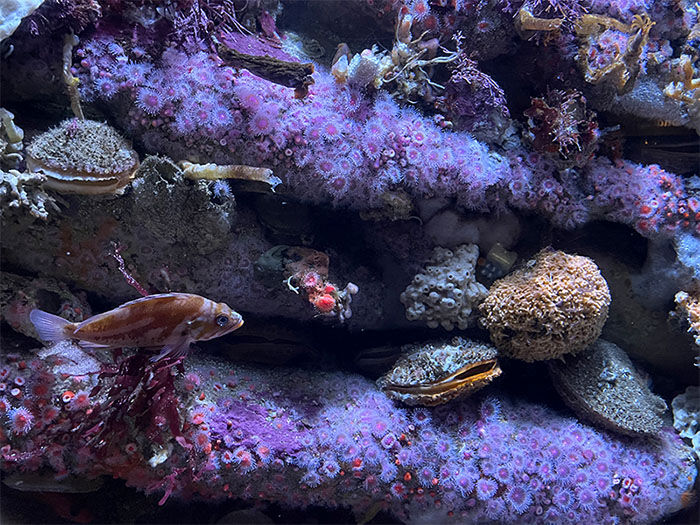
We visited on a Sunday in May, so not ideal. We got to the aquarium at about noon and left at 5 pm closing. I definitely could have used an extra hour to 90 minutes, as we skipped some of the films and a feeding and had only about 5 minutes to browse through the shop near the exit. You know you best, so take all of this information and decide what you think you’ll need.
Food
No outside foods or drinks are permitted inside the aquarium, unless you have a medical condition. There are two exceptions to this rule. They do allow “small snacks”, though what is considered “small” isn’t well defined on their webpage. I brought a protein bar and it was fine, but I imagine they might ask you some questions if you try and sneak in a Tupperware filled with lasagna or something. Second exception is refillable water bottles. These are permitted, and water fountain locations are labeled clearly on the aquarium map.
The aquarium cafeteria is upon from 10 am until approximately 30 minutes before closing. There is plenty of seating, and ordering can be done using your mobile device, a cafeteria kiosk, or with cafeteria staff. Menu items rotate throughout the season, but a sample menu can be found here.

If you don’t want to eat at the aquarium (we all know museum/zoo/aquarium/theme park food is never the cheapest option), you can exit the aquarium and return the same day. Just be sure to get a hand stamp on your way out to allow for hassle-free re-entry. There are plenty of restaurants within a 5 minute walk of the aquarium, or if you’ve got your own lunch waiting in the car, there are also plenty of nice nearby picnic sites - Lovers Point, Berwick Park, and San Carlos Beach are all good nearby options.
Aquarium Tour & Exhibit Overview
The Aquarium Map
The aquarium has two wings and two floors. The original "Ocean’s Edge" wing features aquatic life that lives in and around the shores of Monterey Bay. The "Open Sea" wing was added in 1996, and highlights sea life found out in the open oceans, from the surface all the way down to the dark depths.


OCEAN'S EDGE WING
Hovden's Cannery
In July of 1916, a man named Knut Hovden opened the Hovden Food Products Cannery on the current site of the aquarium, which would eventually become the largest on Cannery Row. The local sardine fishery industry started to decline in the 1950s, and the cannery closed for good in 1973. In October 1984, the building officially began its second act, reopening as the Monterrey Bay Aquarium! This exhibit highlights the building’s cannery origins, featuring vintage artifacts including the original boilers and smokestack.

Kelp Forest
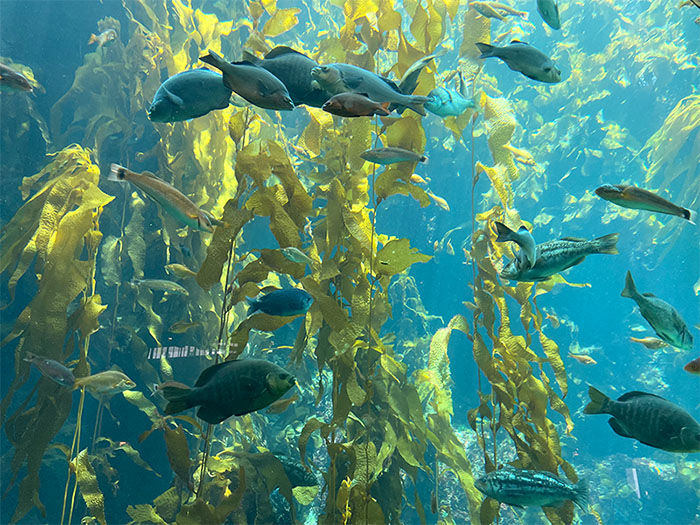
Entering the Ocean’s Edge area you’ll first see the Kelp Forest exhibit, one of the highlights of the aquarium. This 3 story tank is 65 feet wide and 28 feet deep, holding 343,000 gallons of water. Wild kelp forests are such bastions of biodiversity, and the exhibit here is no exception, as this tank is home to over 20 species of plants and animals.
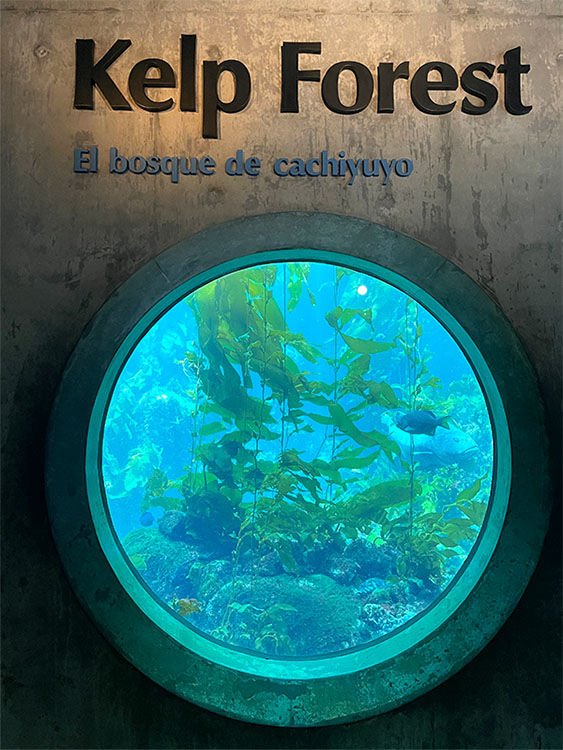
Kelp forests are very tricky to maintain in an aquarium setting, as they only thrive under specific conditions. To mimic the natural environment as much as possible, the aquarium kelp grow in direct sunlight and water is pumped into the exhibit directly from Monterey Bay. Pumps provide up to 2,000 gallons of seawater per minute into the tank, and a specially designed machine moves the water around every few seconds, mimicking the constant ebb and flow that natural ocean surge would produce. Kelp needs all of these conditions met in order to survive. Kelp also grow extremely fast, at a rate of about 4 inches per day! The aquarium employs underwater scuba gardeners (new dream job goal...?) who keep these giant plants from getting too big for their tank. While you’re at this exhibit, be on the lookout for wolf eel, giant sea bass, California sheephead and Garibaldi!
Monterey Bay Habitats
The Monterey Bay Habitats is a hallway exhibit is made of 4 zones: Deep Reef, Sandy Seafloor, Shale Reef, and The Wharf. The Deep Reef area is home to the giant pacific octopus, another aquarium highlight. This highly intelligent animal is a master of disguise, can recognize familiar people, and solve complex mazes.

Sandy Seafloor highlights the creatures that live in… well, the sand! The Shale Reef section highlights rocky underwater reefs made of fragile shale rock. The Wharf section recreates the underwater world beneath Monterey’s piers, docks, and harbor pilings. As you move through these zones, there is also a centerpiece tank that is one of the Aquarium’s signature multi-habitat displays — It’s a cross-section of Monterey Bay that ties together all the ecosystems featured here in a single continuous environment, so you can see how it all interacts out in the ocean. Try to spot the resident Broadnose sevengill shark, pacific angel shark, and leopard shark! At the end of this section you’ll find the Real Cost Cafe.

This is a faux interactive diner experience where you can “order” fish and virtual chefs will advise you if you’ve made a sustainable choice.

The Monterey Bay Aquarium has a seafood watch program, which helps both business and consumers choose seafood that that is fished or farmed in a sustainable way. You can view all the detailed sustainability guides online, and we also received small printed versions for both national seafood and sushi during our visit. I found these really informative, there was quite a bit I wasn't aware of!


Rocky Shore
The Rocky Shore exhibit features critters who live in the intertidal zone, where the ocean meets the land - a world where the ebb and flow of the tides is king. This section is home to one of the aquarium’s most iconic and photographic spots - the wave crash walk-through tunnel!
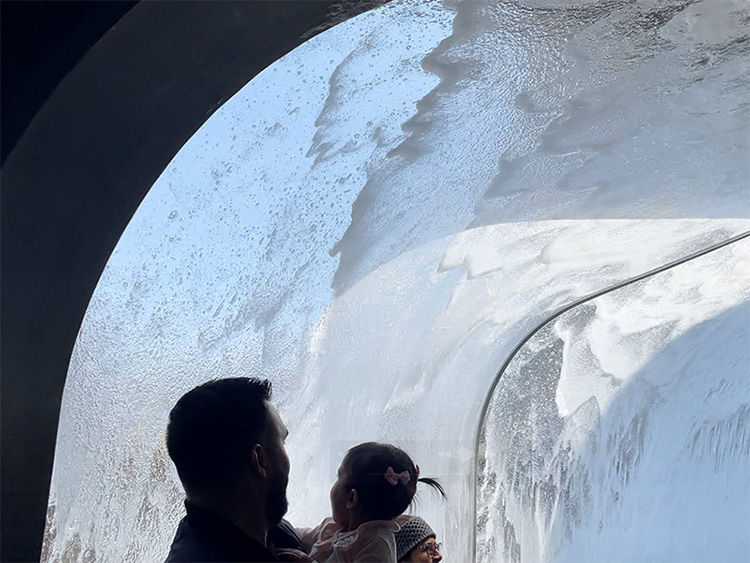
600 gallons of water are pumped and crashed over a tunnel into an outdoor display every 30 seconds for the full duration of the aquarium’s opening hours, every day. It’s a unique experience that mimics the feeling of being in a real tide pool during heavy surf. Even though you know the wave is coming, it still makes you jump a bit when all that water comes violently crashing down!
Sandy Shore & Aviary
The aviary is unique in that it is located right in front the natural environment it mimics. So while the seaside birds who live here forage for insects in the sand (aquarium staff bury them so that the birds hunt for their food as they would in the wild), you can see the ocean through the screened windows, hear the ocean waves crash onto the shore, and feel the sea breeze as you observe the birds.

This is certainly one of the nicest captivity setups I’ve ever seen for birds! At the end of this section you’ll come across the Bat ray and Rocky shore touch pools. We didn’t get a chance to experience these due to the crowds, but they’re a nice hands-on opportunity for slower days and thinner crowds.
Back Deck: Life on the Bay & the Great Tide Pool
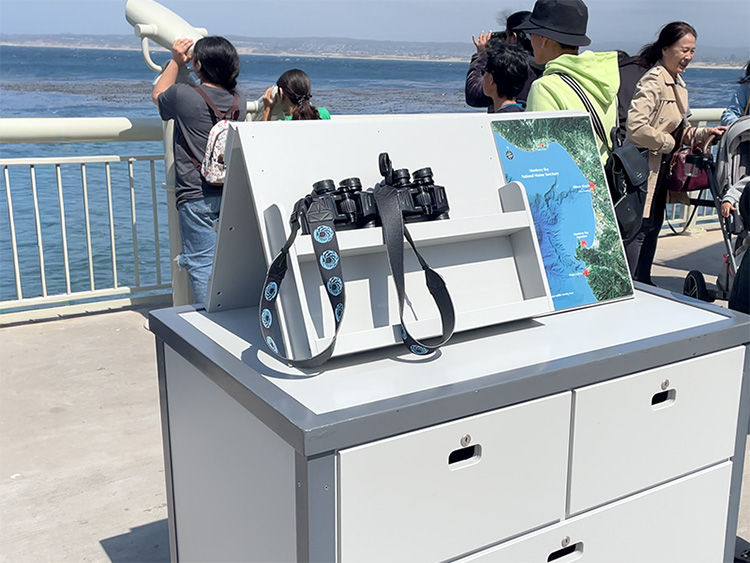
Heading outside to the aquarium’s back deck, you’ll be directly facing the waters of Monterey Bay. There are a few additional exhibits out here, including the one that receives the deluge from the wave crash tunnel. Just off the back deck is the aquarium’s great tide pool, a partially man-made rocky area that is useful for both wild marine life and the occasional aquarium resident when an outdoor rehabilitation space is needed.

This space is also a great viewpoint to see some of the local wild residents - Common and Rizzo’s dolphins, whales, sea lions, and sea otters can all be spotted from back here.
Sea Otters
Heading back inside we’ll come to the final first floor exhibit in this wing, the sea otters. Always a popular spot, this two story tank provides underwater viewing on the first floor, and a staircase leads up to the second level for observing the sea otters at the surface.

Always entertaining and acrobatic, the southern sea otters here are rescues who can no longer survive in the wild. The Monterey Bay Aquarium is very involved with sea otter protection and research, and you can learn more the Sea Otter program or donate here.
Splash Zone (Kid's Area) - Currently Closed for Refurbishment
Heading upstairs, this area was home to the Splash Zone, a family friendly section filled with several fun and colorful exhibits. This area is currently being refurbished, but I’ll touch on what the prior area featured, so you can get a sense of what the future exhibit may offer. Inside the Splash there was the Coral Reef Kingdom, Enchanted Kelp Forest, Rugged Rocky Shores and the penguins.

Inside the Splash Zone you’d find the Coral Reef Kingdom, Enchanted Kelp Forest, Rugged Rocky Shores and the penguins. Originally intended to be a temporary exhibit, the African penguins are now beloved permanent residents.

The Splash Zone area was closed in Summer 2025, and as of the blog's publishing date there has yet to be an announcement on the Splash Zone reopening. Potentially sometime during Summer 2026, but no further details have yet been made publicly available. Stay tuned!
OPEN SEA WING
Crossing the bridge from the Splash Zone section, you’ll see many life sized models of local marine mammals hanging from the ceiling. The Monterey Bay Aquarium is very much focused on the local ecosystem, so in this way the big aquatic residents living out in the bay can have some representation here as well.

The end of the bridge leads you to the newer Open Sea Wing, which can also be accessed via the escalators across from the first floor auditorium.

Out to Sea
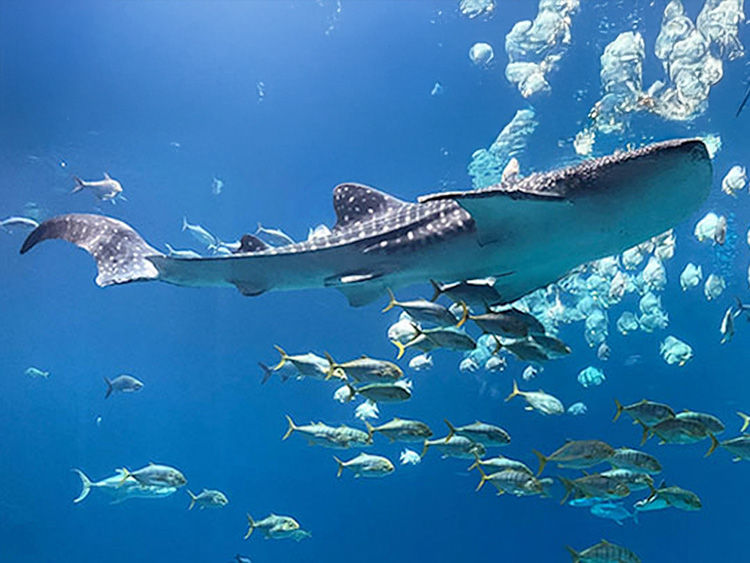
The entrance to this exhibit is nearly overwhelming, featuring an overhead round tank filled with 7,000 pacific sardines. While mesmerizing to watch, the exhibit’s signature tank is even more impressive, bringing the depths of the ocean to the surface for visitors to witness up close. The tank is 90 feet long, 52 feet wide, and 35 feet deep. It holds 1.2 million gallons of water, which is nearly half of the aquarium’s total water volume!

Be on the lookout for the green sea turtle, scalloped hammerhead shark, and yellowfin tuna. This area is also home to some of the jellyfish exhibits - I love watching the delicate beauty of their movements up close.

Seabirds
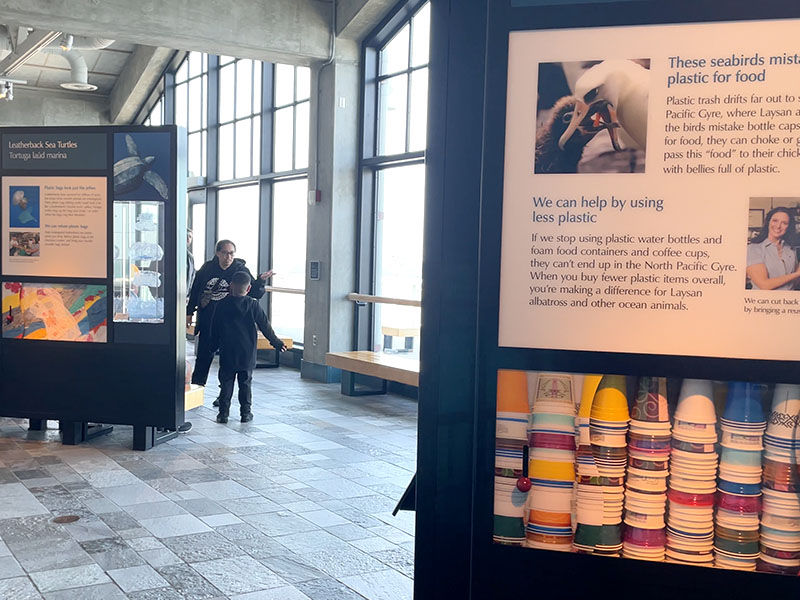
The seabird exhibit features the common murre, pigeon guillemot, and the famous tufted puffin, known as “the parrot of the sea”. The exhibit also features an art for the environment section, where artists have used discarded items to create pieces and sculptures that have environmental education messaging.
Into the Deep
The last exhibit in this wing is back down on the first floor. Into the Deep opened in 2022 and is home to the largest collection of deep sea animals in the country, offering visitors a unique opportunity to view these mysterious creatures up close. It is one of the most ambitious deep-sea exhibitions ever created — a massive, immersive exploration of the ocean below about 650 feet, where sunlight disappears and some of Earth’s strangest and least understood animals live. The giant isopod, glowing sea cucumber, Abyssal comb jelly, and Bloody-belly comb jelly were some of my favorites. This exhibit in particular has a wonderful online counterpart, along with a live spider crab cam!
Animal Feeding Presentations
The most active times at the exhibits are meal times! The aquarium currently has scheduled daily feedings at the sea otters, open sea, sea birds, and kelp forest. 4 days a week at the kelp forest is an encounter with Makana, the resident Laysan albatross. Living at the aquarium due to an injured wing, Makana is a unique opportunity to meet one of these birds, who are rare in captivity. We made it to the sea otters and kelp forest feedings.

Both were well worth it, but do claim your spot at the exhibit early, especially if you’re at the aquarium on a busy weekend day like we were. The kelp forest is a big tank with two levels of viewing areas so not as critical there, but the otter exhibit requires at least a 20 minute early arrival if you really want to see those adorable little guys go nuts for snack time. The daily schedule is available at the Membership & Tours and posted online. Click here for short summaries of the currently available feeding presentations.
Auditorium Film Presentations
15 minute short educational films run throughout the day at the auditorium, which is located down the hall on the right when you enter the aquarium. The films are all included with your admission ticket. The daily schedule is available at the Membership & Tours center, posted outside the auditorium, and of course you can view the daily film schedule online here.

Make sure you get to the theater on time, as they don’t permit late seatings, even if there are still available seats. Current films are posted online so you can see in advance what you might want to watch. They’re all really good and suitable for all ages.
Private Tours
As of May 2026, there are 4 private tour options available, which require separate tickets and are at an extra cost.
All About Animal Care Tour (ages 8 to adult)
$40 per person, 1 hour duration, offered daily
Behind the scenes tour all about how the aquarium cares for its thousands of fish and animal residents.
Aquarium Past and Present Tour (ages 8 to adult)
$29 per person, 1 hour duration, offered twice daily
See the behind the scenes spaces and learn about the history of the aquarium
Family Adventures in Animal Care (all ages)
$35 per person, 45 minutes duration, Saturday and Sunday only
Behind the scenes look at aquarium animal care geared toward families with kids under 8
Underwater Explorers (ages 8 - 13)
$150 per child, 90 minutes duration, June 13 - Sept 7 2026 Only
Guided surface scuba diving for kids in the Great Tide Pool. No experience necessary.
As with general admission, there are no refunds on tour tickets, but they can be exchanged up until 60 minutes before the scheduled tour start if you need to make changes to the time or date.
Souvenirs
If you’re looking to take home a piece of the aquarium, there are 5 options - so don’t worry, they’ve got you covered! Gifts and souvenirs can be found at:
The Aquarium Store (first floor)
Ocean Discovery Store (first floor)
The Store in the Open Sea (Second Floor)
The Aquarium Store at 585 Cannery Row (2 blocks from aquarium near Hoffman Ave)

The merch here is very solid - hard to walk away without at least a little something!
Thoughts & Review
This is one of the top rated and most popular aquariums in the United States for a reason. It seamlessly blends marine education, animal conservation efforts, and entertainment into its unique location at historic Cannery Row. My only criticism of this place is that the official map and the signage in the aquarium don’t always match up. Sometimes it was a bit tough to find exactly where I was on the map, but everything else was amazing.
Also I do strongly emphasize visiting during off peak times for the best experience. The Sunday afternoon crowds we battled were very intense, and may be off putting if you don’t handle those types of situations well. Otherwise, enjoy your experience! This place is really special. It’s historic, is filled with so many unique animals to meet, and it really works hard to keep the Monterey Bay ecosystem strong and healthy for generations to come.

Comments